World Stock Push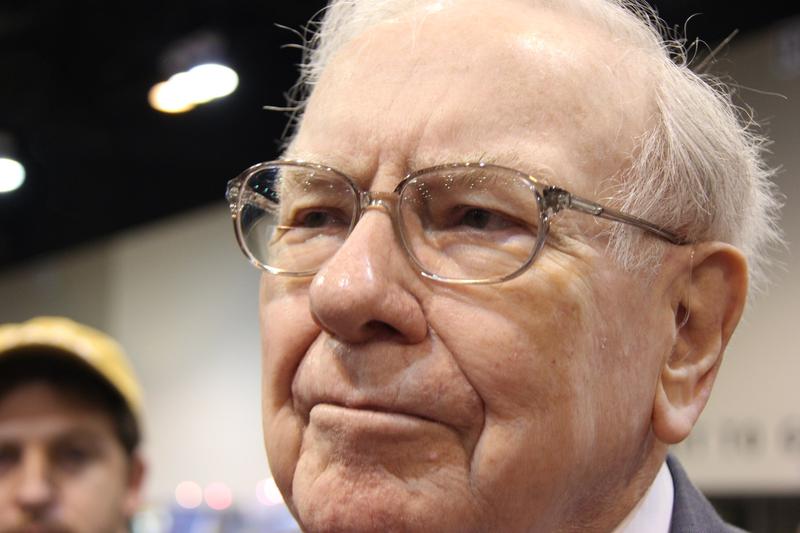
Warren Buffett has given plenty of memorable quotes through the years. Probably none of them is as famous as his investing rule, "Be fearful when others are greedy and be greedy when others are fearful." Those 13 words effectively summarize the style of contrarian investing that has helped make Buffett one of the world's wealthiest people. But what should investors do when both fear and greed manifest themselves at the same time?
Warren Buffett. Image source: The Motley Fool. Image source: The Motley Fool.
Two conflicting signals Investors are fearful right now. At least, that's what the CNN Fear & Greed Index says. This index measures seven indicators, including market momentum, market volatility, and safe haven demand.
It's currently at 38, which is firmly in the "Fear" range. Two of the index's component indicators even reflect "extreme fear." First, the Stock Price Strength indicator shows the number of stocks trading at 52-week highs versus those at 52-week lows on the New York Stock Exchange ( NYSE ). There are many more stocks at lows than at highs right now, reflecting extreme fear.
Second, the Stock Price Breadth indicator shows a greater share of volume falling than rising, another extreme fear warning sign. However, there are also ample signs of greed in the market. Perhaps the best example is a metric named after Buffett himself -- the Buffett indicator.
This indicator is the ratio of total stock market capitalization to GDP. Buffett wrote in 2001 that when this ratio approaches 200%, investors are "playing with fire." It's now at an all-time high of 237%. Similarly, the S&P 500 ( ^GSPC +0.59% ) Shiller CAPE (cyclically-adjusted price-to-earnings) ratio is near its second-highest level ever.
The last time it was this high was in early 2000, right before the stock market crash that followed the dot-com bubble's burst. Another strong sign of greed is margin debt, the amount investors borrow from their brokerages to buy or short-sell stocks. Total margin debt has topped $1.4 trillion for the last four months, according to FINRA, the private self-regulatory organization overseeing U.S. broker-dealers.
What Buffett's rule says to do Should investors be fearful or greedy right now? The answer is "both," according to Buffett's 13-word rule. Being fearful means that you shouldn't chase momentum or buy growth stocks with valuations that can't be justified.
It won't be hard to find examples of the kinds of stocks that are best avoided. However, you can be greedy in areas of the market where others are fearful. Check out the stocks that have lower price-to-earnings multiples in a broader market that's priced at a premium.
Pipeline stocks are one place to start. Enterprise Products Partners LP ( EPD -1.82% ) , for example, has a forward earnings multiple of only 11.9. The company benefits from the increasing demand for U.S. natural gas.
It's also practically a blue chip in the midstream energy industry. Premium Feature Moneyball Superscore 73 /100 Today's Change ( -1.82 %) $ -0.67 Current Price $ 36.08 Healthcare stocks have also lagged well behind the overall market this year. Bargains can be found in the sector, too, including Bristol Myers Squibb ( BMY -0.77% ) , which trades at only 9.4 times forward earnings.
Premium Feature Moneyball Superscore 68 /100 Today's Change ( -0.77 %) $ -0.46 Current Price $ 59.12 Simple but complicated Buffett referred to his investing rule as "simple" when he wrote about it in 2008. And, to some extent, it is. However, it's also complicated in some ways.
You shouldn't rush to buy every stock just because the CNN Fear & Greed Index reflects that other investors are fearful. You shouldn't sell every stock because the Buffett indicator and S&P 500 Shiller CAPE ratio reflect pervasive greed in the market. In October 2026, as throughout much of the stock market's history, there's a mixture of both fear and greed.
The trick is to understand how to balance the two extremes. Investors who are cautious yet opportunistic have the best chance of long-term success.
Source: The Motley Fool